What a Foshan proforma invoice must show before you pay a factory deposit: company account, piece specs, deposit wording, balance terms and warning signs.
Before you pay a deposit in Foshan, the invoice should name the factory's registered company and its company bank account, list every piece with its size, material and finish, state the deposit (we pay 40% for furniture and 50% for wardrobes), the production date, and say the balance is due only after inspection. SVIKARR's team in Foshan checks those lines on every proforma invoice before a client's money moves, so the paper protects the order rather than the factory.
What should a Foshan proforma invoice include before I pay?
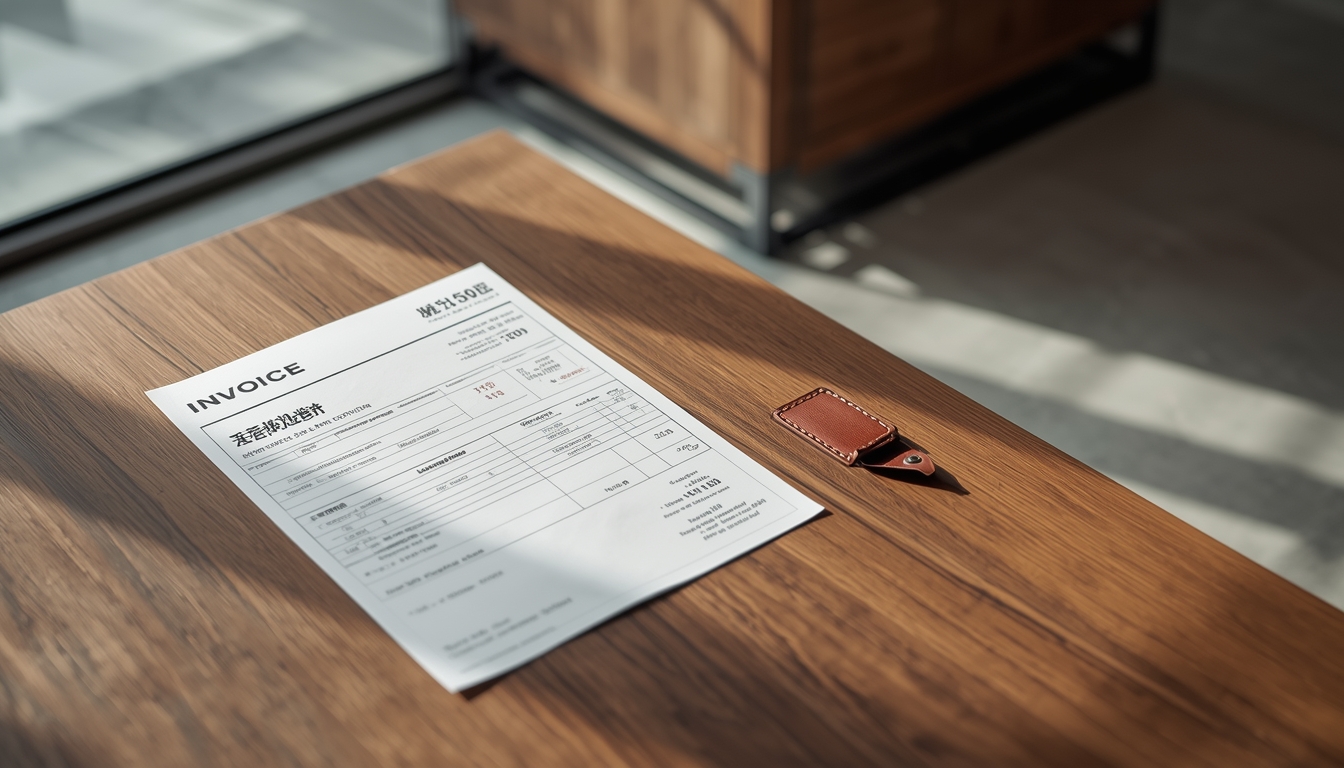
A proforma invoice (形式发票) is the document you pay the deposit against, so it has to describe the order completely. If it only says "sofa, grey, 1 pc, ¥18,000", you've paid for whatever the factory decides a grey sofa is.
Here is the checklist we use. Each line exists because we've seen what happens without it.
| Invoice line | What to write | Why it matters |
|---|---|---|
| Seller | Name exactly as on business licence | Matches the bank account |
| Bank account | Company account in seller's name | Personal accounts carry no recourse |
| Each piece | Size, material, finish, fabric code | Stops sample-to-bulk switches |
| Deposit | Percentage, amount, what it is called | 定金 and 订金 differ in law |
| Balance | Due after inspection, before loading | You still hold the balance |
| Production | Days or a ready date | Plans around holidays |
| Delivery term | EXW or FOB, with the port | Who pays to reach the ship |
Two lines matter more than the rest: the bank account and the description of each piece.
Whose name should be on the bank account?
The account you pay must belong to the company on the invoice, and that company name should match the business licence the factory sends you. A deposit to a salesperson's personal account, or to a "sister company" that appears only on the invoice, is the first thing we refuse.
A showroom in Lecong may sell for a factory 10 to 15 km away, so the name on the shop sign and the name on the licence can differ. That's common, and the licence explains it. A third name on the bank details is the problem.
Change of bank details by email is the other trap. Business email compromise, where a fraudster sends "updated" payment details from a real or look-alike address, drew 24,768 complaints and about US$3.05 billion in reported losses in 2025, according to the FBI's 2025 Internet Crime Report. The FBI defines it as a scam aimed at people "working with suppliers" who regularly pay by wire.
If the bank details on an invoice change after you've agreed the order, stop and confirm the change by phone or in person with someone you already know at the factory, never by replying to the same email.
Our article on the safest way to pay a furniture factory in China covers the payment methods themselves (bank transfer, letters of credit, escrow-style arrangements) in more detail.
How much deposit is normal, and what should it be called?
Deposits in Foshan usually run 30-50% of the order to start production, with the balance paid before the goods ship. Our own rule is 40% for furniture and 50% for wardrobes, because wardrobes are cut to your room's measurements and have no resale value to the factory if you walk away.
The word on the invoice matters more than most buyers expect. Chinese law treats two similar-sounding words very differently:
- 定金 (dìngjīn) is a deposit that guarantees the contract. Under Articles 586 and 587 of China's Civil Code, it can't exceed 20% of the contract value. If the buyer breaks the deal it's forfeited; if the seller fails to perform so the purpose of the contract can't be met, the seller must return double. The part above 20% doesn't count as 定金.
- 订金 (dìngjīn, written differently) or 预付款 is an advance payment. It carries no penalty either way and is generally returned if the deal falls through.
A Chongqing county court set out the difference plainly in a public note on 定金 and 订金. So a 40% deposit can't all be 定金 in law: anything above 20% of the order counts as an advance payment. We ask for the deposit to be described clearly and for the refund terms to be written in the contract rather than left to the word.
Be realistic about what this buys you. Suing a factory in a Chinese court from Texas or Sydney is slow and costly. In practice, the balance you haven't paid yet is your strongest protection. The wording gives you evidence and a stronger hand in a dispute. For a large order, a short review by a lawyer who reads Chinese contracts is money well spent.
How detailed should the description of each piece be?
Detailed enough that a stranger could check the finished piece against it. Every size, finish, fabric code, hardware brand and colour goes in writing, or it drifts between sample and bulk.
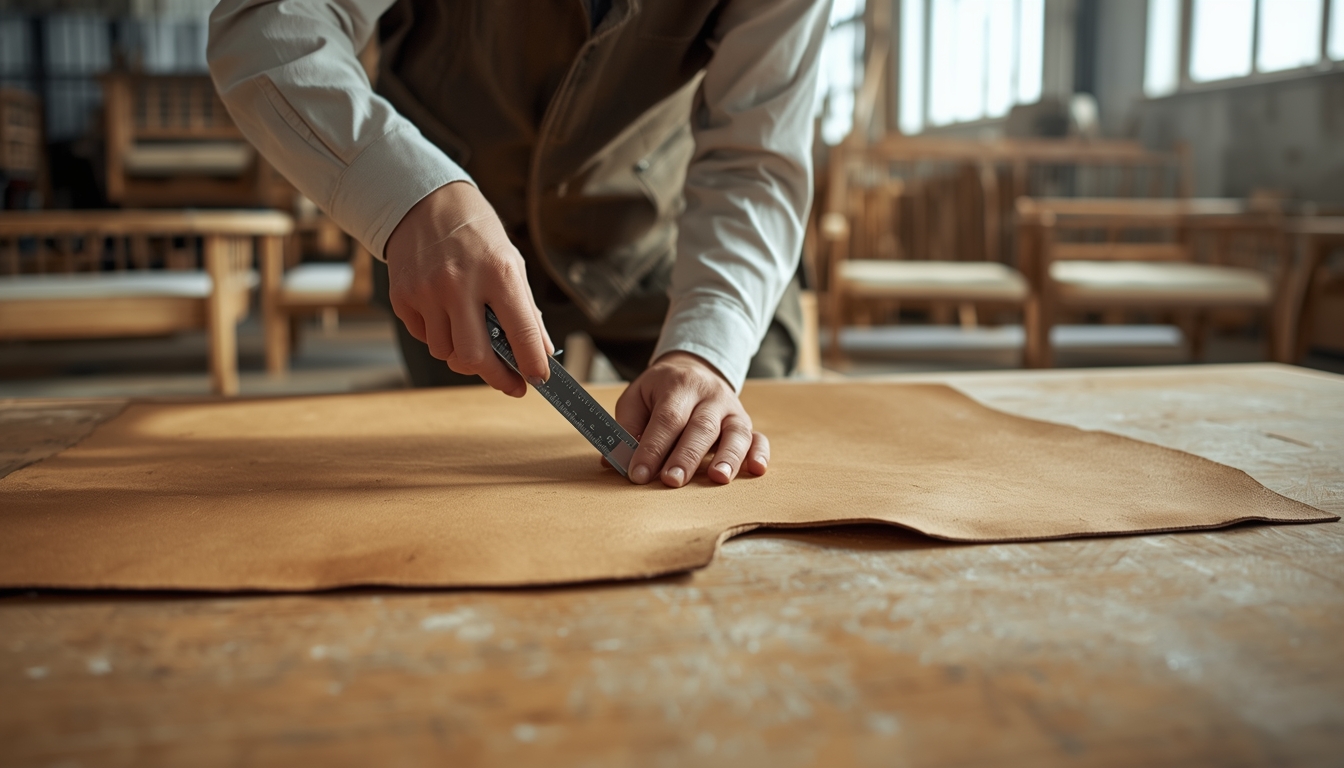
For a sofa, that means the overall width, depth and seat height in millimetres, the frame material, the foam density, the leather or fabric with its code, and the leg finish. For leather, we write the thickness: good leather is about 1.0-1.6 mm and ultra-premium is about 2 mm. If a factory offers "Italian leather" at Chinese-leather prices, it isn't Italian, and an invoice that names the tannery or the grade makes that conversation happen before payment instead of after delivery.
When the description is too long for the invoice, attach a signed specification sheet with photos and refer to it by number on the invoice ("as per specification SP-01, attached"). Both parties should sign or stamp it. A company chop (公章) on the invoice and the specification is what a Chinese counterparty treats as binding.
One more thing we write for sofas made in Italian moulds: whether the size can change. At low quantities the mould often fixes the size, and a resized version costs more. Better to find that out on the invoice than at the inspection.
When should the balance be paid?
The balance should be due after an inspection you're satisfied with and before the container is loaded. That single sentence means you still hold most of the money until you've seen the goods.
A typical Foshan order runs 30-60 days of production, then 2-4 weeks at sea to the US West Coast or Australia. Plan 3-4 months door to door. The invoice should give a ready date, and that date should account for the calendar: Golden Week (1-7 October) slows the city, and Chinese New Year, from late January to mid February, stops many factories for weeks. If your move-in date is in March, the order-by timeline planner shows when the deposit needs to go.
Write down what the inspection checks: sizes against the specification, finish, leather thickness, hardware brand, packing. Leather in particular has to be checked during production, at the factory. Once it's on the frame, you can't tell which hide went in.
What are the warning signs on an invoice?
Most problems show on the paper before any money moves. These are the ones we stop for:
- The seller's name differs from the business licence and the bank account holder.
- The deposit asked for is 100%, or 70% or more without a clear reason.
- Pieces are described by model number only, with no sizes or materials.
- The quote changes after you've agreed it, or after the deposit is paid.
- The contact person changes halfway through the deal.
- The factory won't show a live video of the workshop or the piece in production.
- The price is far below what similar pieces cost at Sunlink North, where sofas and beds start from about ¥8,000. Too-good-to-be-true prices are exactly that.
Who shouldn't pay a deposit in Foshan at all?
If you need one or two pieces in under eight weeks, a deposit to a Foshan factory is the wrong tool. Production plus shipping takes months, and the fixed costs of inspection and freight weigh heavily on a small order. Appliances that need a local warranty are also better bought at home.
For US buyers, check the duty first. As of October 2026, upholstered wooden furniture carries a 25% Section 232 tariff, rising to 30% on 1 January 2027, with other duties possible on top (STR). Confirm the exact code with a licensed customs broker before you pay anything.
Key takeaways
- Pay only the company named on the business licence, into its own company account.
- Describe every piece with sizes, materials, finishes, fabric codes and hardware, or attach a signed specification.
- Keep the deposit at 30-50% and tie the balance to an inspection before loading.
- 定金 is capped at 20% under China's Civil Code and works both ways; 订金 is a plain advance payment.
- Confirm any change of bank details by phone with someone you know.
Questions buyers ask
Can I pay the deposit by credit card?
Ask the showroom; policies vary and card fees are often added. For a whole-house order, a bank transfer to the factory's company account against a proper invoice is the norm, and it leaves a clean record that matches the invoice.
Is a WeChat chat record enough as a contract?
A chat record is evidence, but it's a poor contract. Put the agreed terms on a stamped invoice or sales contract with the specification attached, and keep the chat as backup.
What if the factory asks for more than 50%?
Ask why. A larger deposit can be fair for a piece that uses expensive imported material bought just for you, such as a full Italian hide. Without a reason like that, we keep to 30-50%.
Should the invoice be in English or Chinese?
Both, ideally. The factory works from the Chinese, so the Chinese has to be right. We write specifications in English and Simplified Chinese side by side.
SVIKARR's team in Foshan checks the licence, the bank account and every line of the invoice before a client pays, writes the bilingual specification, and inspects before the balance goes. You can read how we work, from sourcing plan to delivery.