How to check a Chinese furniture factory from home: the official business register, live video tours, samples and inspection, and what each one misses.
You can check a Chinese factory from home in three layers: confirm the company is real on China's official business register, watch an unscripted live video of the workshop and your piece in progress, and have someone inspect the goods during production and before loading. The first two prove the factory exists. Only the third proves your order is right, which is why SVIKARR's team in Foshan inspects in person for clients who can't travel.
Can I really judge a factory without going there?
Partly. From home you can confirm a factory is a registered company that makes what it claims. You can't confirm the leather, foam and joinery in your own order without someone standing next to it.
Most guides stop at the first part: check the licence, ask for certificates, order a sample. That catches the ghost supplier with a website and no workshop. It doesn't catch the far more common problem in furniture, where a real factory with a good showroom piece builds your order with thinner leather, lower-density foam or generic hinges, because nobody wrote down otherwise and nobody checked.
So think of it as two questions. Is this a real, capable factory? And is my piece being made the way we agreed?
How do I check that the company is real?
Look the company up on the National Enterprise Credit Information Publicity System (国家企业信用信息公示系统), the free official register run by China's market regulator. As of October 2023 it held records on 182 million business entities, according to People's Daily.
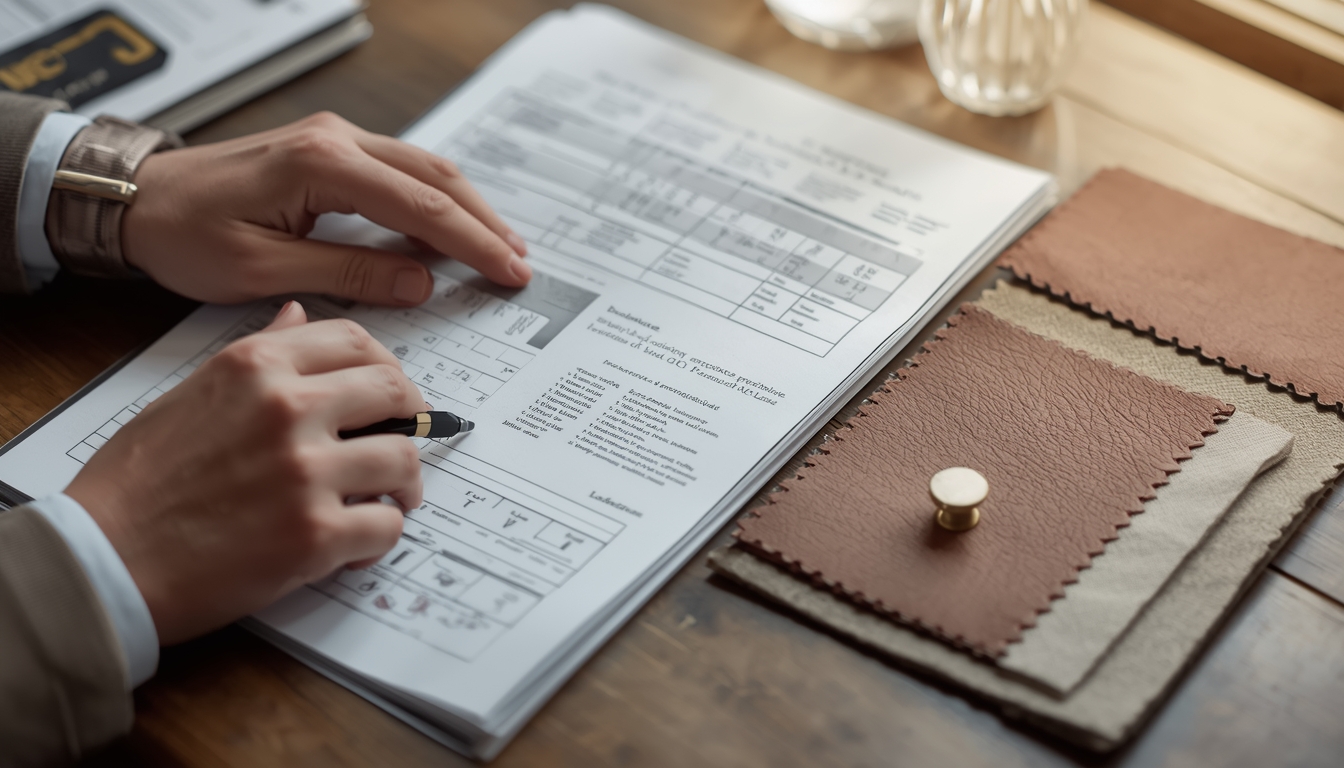
Ask the factory for a photo of its business licence (营业执照), then search the company name or its 18-character unified social credit code. Check four things:
- The name matches the invoice and the bank account holder exactly.
- The business scope (经营范围) includes manufacturing furniture, not only "sales" or "trading".
- The address is an industrial area. Search it on Baidu Maps; a workshop shows as a large roof, a trader as an office tower.
- The records show no administrative penalties or "abnormal operations" listings.
The site is in Chinese and sometimes slow from abroad. A browser's translate function handles most of it.
A trader isn't automatically bad. Many Foshan showrooms sell for factories, and the outstanding makers we use sit within 10-15 km of the Lecong markets rather than inside them. You just want to know who actually builds your piece, because that's whose work you're paying for.
What should a live video call show me?
An unscripted walk through the workshop, with you choosing where the camera goes. A polished company video shows what the factory wants you to see; a live call shows what's there at 3 pm on a Tuesday.

Ask for things a real maker can show at once:
- The frame of a sofa before upholstery, so you can see the timber or plywood.
- A cut foam block, and its density label.
- Leather hides in stock. Real Italian hides are bought by the hide, artificial leather by the metre, so rolls of "Italian leather" are a warning.
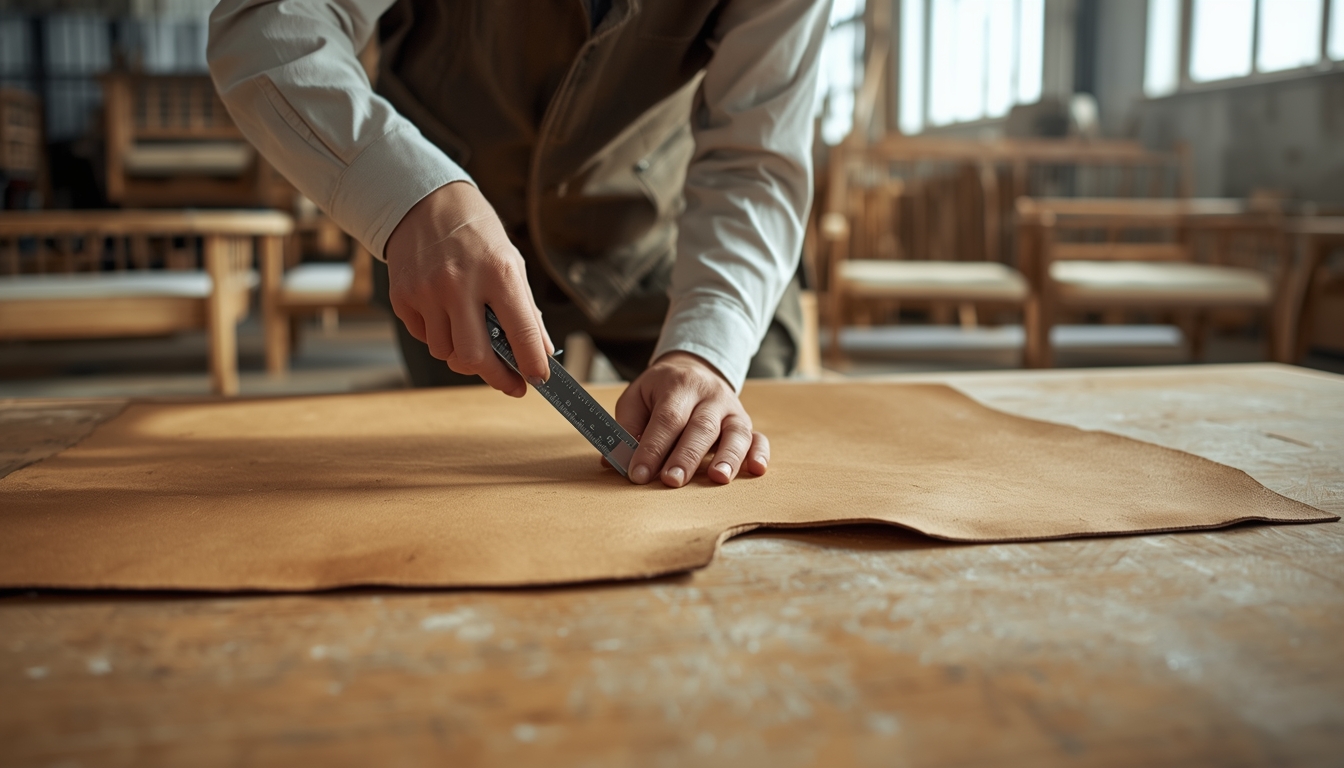
- A vernier caliper on the leather. Good leather measures about 1.0-1.6 mm; ultra-premium about 2 mm.
- The hardware drawer, with the brand on the hinges and runners.
What a video can't show: true colour (screens shift it), how a piece sits, and whether the materials on camera are the ones that go into your order three weeks later.
Which checks prove what?
Each method answers a different question, and none of them covers everything. This is how we weigh them.
| Check | What it proves | What it misses |
|---|---|---|
| Business register lookup | Company exists, scope, address | Workmanship |
| Live video tour | Real workshop, real machines | Your order's materials |
| Sample piece | Factory can make it well | Bulk matching the sample |
| Inspection in production | Materials going into your order | Final finish, packing |
| Pre-shipment inspection | Finished goods against spec | Hidden inner frame |
The checks that matter most for a luxury order are the last two, because they look at your goods rather than the factory's best work.
Who should inspect, and when?
Someone you trust, at two points: during production, while frames are bare and leather is being cut, and again when the goods are finished and packed. For high-value pieces, inspect every piece, not a sample.
Large factory runs are often checked by statistical sampling with the acceptance-quality-limit (AQL) tables of ISO 2859-1, which inspection firms such as SGS, QIMA, Bureau Veritas and Intertek work to. That suits 2,000 dining chairs. It doesn't suit a house of one-off pieces, where a sample of a single sofa is the sofa.
Leather is the clearest case. It has to be checked during production, at the factory. Once it's on the frame you can't tell which hide went in, or whether it's the full-grain you paid for. Full-grain isn't sanded, shows its pores and breathes better; corrected grain looks smoother in a photo.
The most useful thing you can send a factory is a written specification with every size, finish, fabric code and hardware brand, because an inspector can only check what's written down.
Our article on what a full-house furniture order from Foshan looks like shows where those inspections sit in the whole timeline.
How does a remote buyer judge quality before choosing a factory?
Compare it with a known reference. The way we work in Foshan: choose the style at Louvre in Lecong, where branded and patented designs usually start above ¥30,000 a piece, then find the same quality of make at Sunlink North or at the factory. Sunlink North is where we usually buy, with sofas and beds from about ¥8,000.
From home, the equivalent is to ask two or three factories for the same piece to the same specification and compare the answers, not only the prices. A factory that asks about foam density, seat height and the leather grade is thinking about your piece. One that sends a price in ten minutes for "Italian leather" at a Chinese-leather price is telling you something too. Too-good-to-be-true prices are exactly that.
If you'd rather see the ground for yourself, the Foshan furniture market map shows where the Lecong malls, Longjiang factories and Guzhen lighting sit.
When is buying from a factory you can't visit the wrong choice?
When the order is one or two pieces, the deadline is under three months, or nobody can be in the factory during production. Production usually takes 30-60 days and sea transit to the US West Coast or Australia 2-4 weeks, so plan 3-4 months door to door.
Small orders also carry the same inspection and freight overheads as large ones, which eats the saving. For US buyers, check the duty before anything else: as of October 2026, upholstered wooden furniture carries a 25% Section 232 tariff, scheduled to rise to 30% on 1 January 2027, with other duties possible on top (STR). Confirm the code with a licensed customs broker.
Key takeaways
- Look the company up on China's official register and match the name to the invoice and bank account.
- Use an unscripted live video to see frames, foam, hides and hardware, and measure the leather on camera.
- A sample shows what a factory can do; only inspection shows what it did with your order.
- Inspect during production and before loading, every piece for one-off luxury furniture.
- Put every size, finish, fabric code and hardware brand in a written specification.
Questions buyers ask
Is a factory audit report enough?
An audit tells you about the factory on the day of the audit: its equipment, staff and systems. It says nothing about the materials in your order. Treat it as a first filter, then inspect the goods.
Can I trust certificates like ISO 9001?
Check them with the issuing body's online register, since certificates are easy to copy. Even a genuine one covers the factory's management system, not the thickness of the leather on your sofa.
Should I order a sample first?
For a large repeat item, such as 12 dining chairs, yes. For a one-off sofa, the sample often is the order, so the written specification and an inspection during production do the work a sample would.
How do I know the photos sent during production are of my piece?
Ask for photos with something unique to your order in the frame: a label with your order number and the date, or the fabric code tag. Better still, have someone you trust see it in person.
SVIKARR's team in Foshan checks the factory, writes the specification in English and Chinese, and inspects your pieces during production and before loading, with the photos in your client app. You can read how we work, from sourcing plan to delivery.