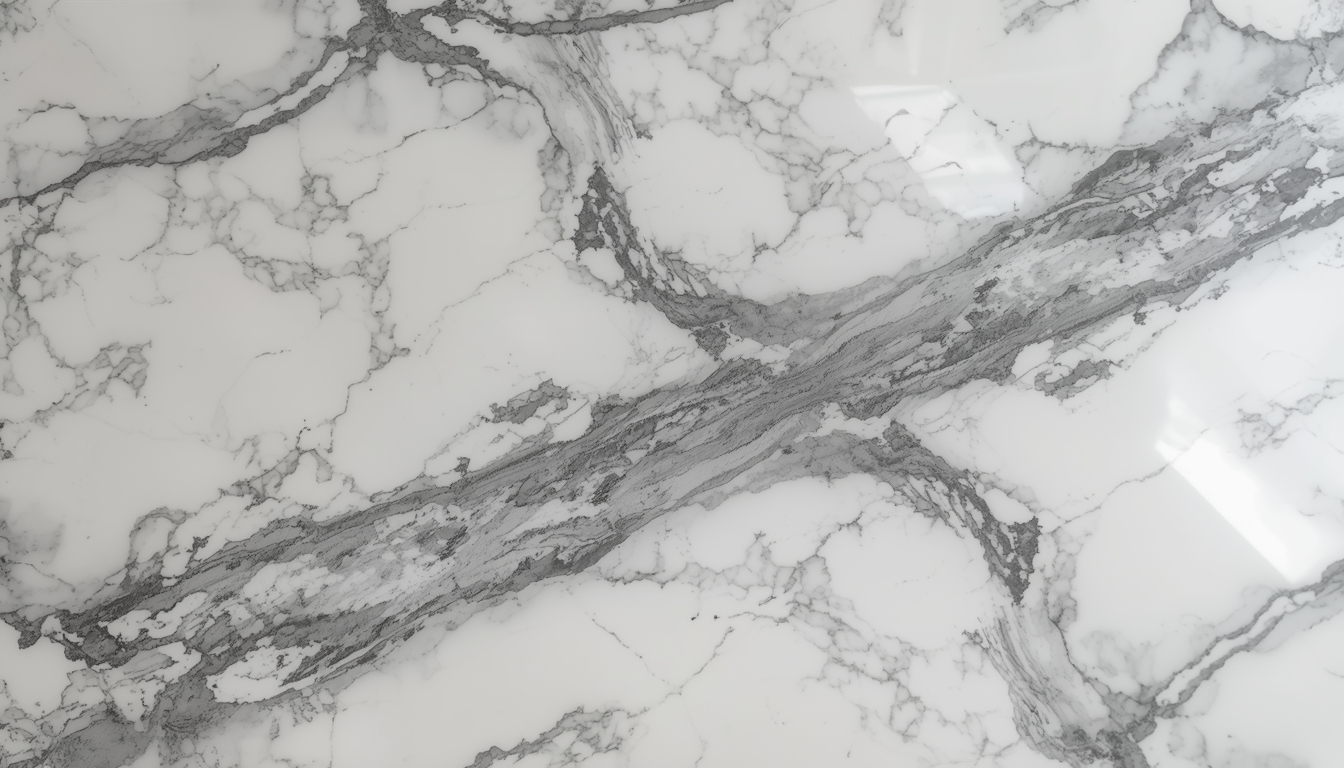
Learn how to verify slab quality, thickness, and vein matching for marble and sintered stone from Foshan to avoid cracks and shipping disasters.
Before you wire a deposit for stone, you must verify the slab's thickness, the exact vein pattern through photographic proof, and the factory's edge-processing capabilities. SVIKARR prevents costly mistakes by inspecting every slab for micro-cracks and ensuring the "book-match" actually aligns before the stone is even cut to your dimensions.
What are the main differences between marble and sintered stone?
Marble is a natural metamorphic rock, while sintered stone is a man-made engineered surface created through extreme heat and pressure.
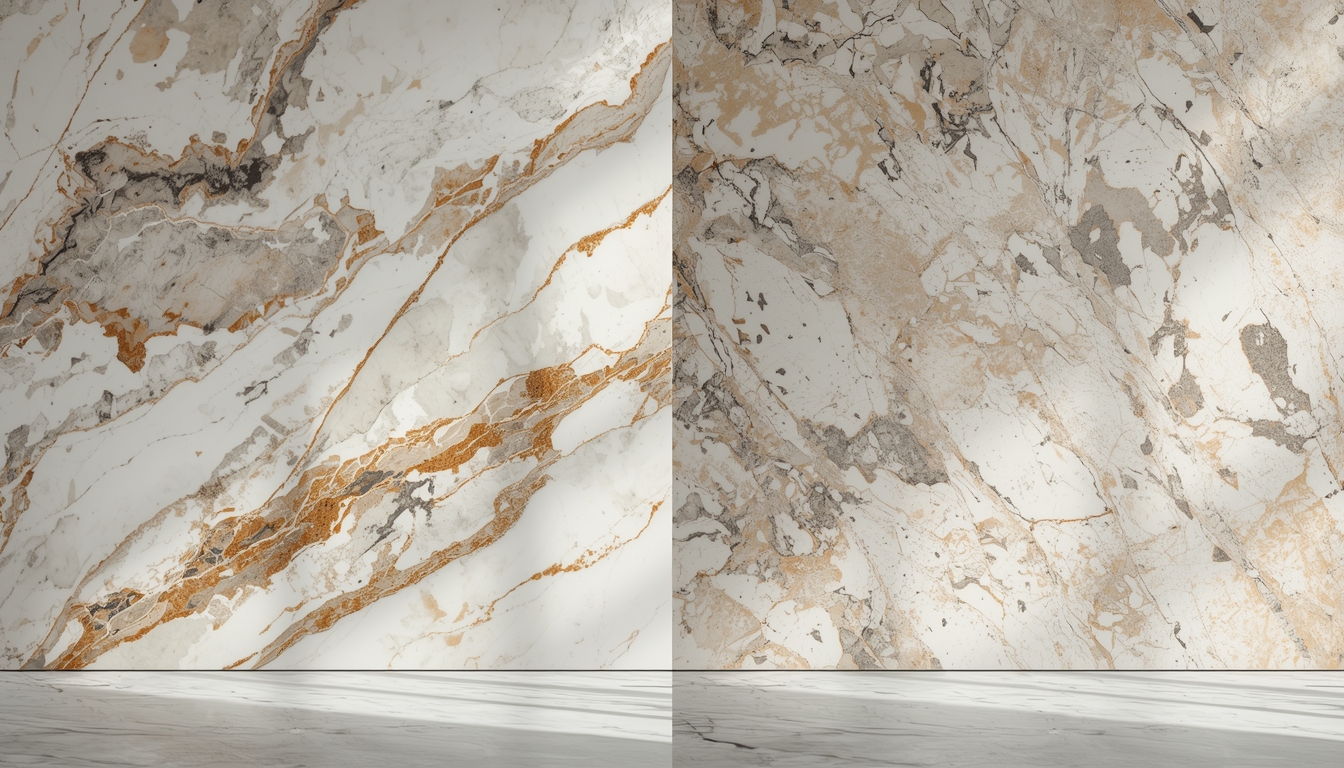
Marble offers unmatched depth, unique veining, and a prestige that cannot be replicated, but it is porous and requires sealing. It is susceptible to etching from acidic liquids like lemon juice or wine. Sintered stone (often referred to by brand names like Dekton or Neolith) is incredibly dense, non-porous, and highly resistant to scratches and heat. It is an excellent choice for high-traffic kitchen countertops or outdoor kitchen islands. However, because it is so rigid, it can be more prone to cracking if the sub-base is not perfectly level during installation.
How do I ensure the vein matching is correct?
You must request "book-matching" or "continuous veining" specifications and insist on seeing the specific slabs allocated to your project.
In the stone markets of China Ceramics City, many slabs look identical in a small sample but vary wildly when laid out. When we source for luxury builds, we don't just look at a swatch. We ask the supplier to lay out the specific slabs intended for your island or feature wall. We check that the veins flow logically from one piece to the next. If you are ordering a large format, such as a 12mm sintered stone kitchen island, the pattern must be mapped out digitally before cutting. This prevents the "patchwork" look that ruins high-end interiors.
What physical specs must I verify in my written order?
Always specify the slab thickness, the edge profile, the finish (polished, honed, or leathered), and the slab dimensions.
Never assume "standard" thickness. For natural marble, 20mm is common for heavy-duty use, while 12mm or 15mm is often used for wall cladding. For sintered stone, 6mm is common for vertical surfaces, while 12mm or 20mm is used for countertops. We also check the "rectification", whether the edges are cut perfectly straight to allow for minimal grout lines. If you are importing to the US, you should also use our landed cost calculator to factor in the weight of the stone, as it significantly impacts freight.
When is buying stone from China a mistake?
Buying stone from China is the wrong choice if your project is on an extremely tight timeline or if you require small, delicate pieces that need local warranty support.
Stone is heavy and fragile. If your move-in date is only eight weeks away, the 30-60 day production window plus 4 weeks of sea transit leaves zero margin for error. If a slab arrives cracked, a replacement can take months. Furthermore, for small bathroom accessories or specialized sanitary ware, the shipping costs per unit often outweigh the savings. Stone is most cost-effective when it is part of a larger, "whole-house" shipment where you can maximize container space.
How do I prevent breakage during transit?
Use reinforced wooden crates and ensure the factory uses "A-frame" loading within the container.
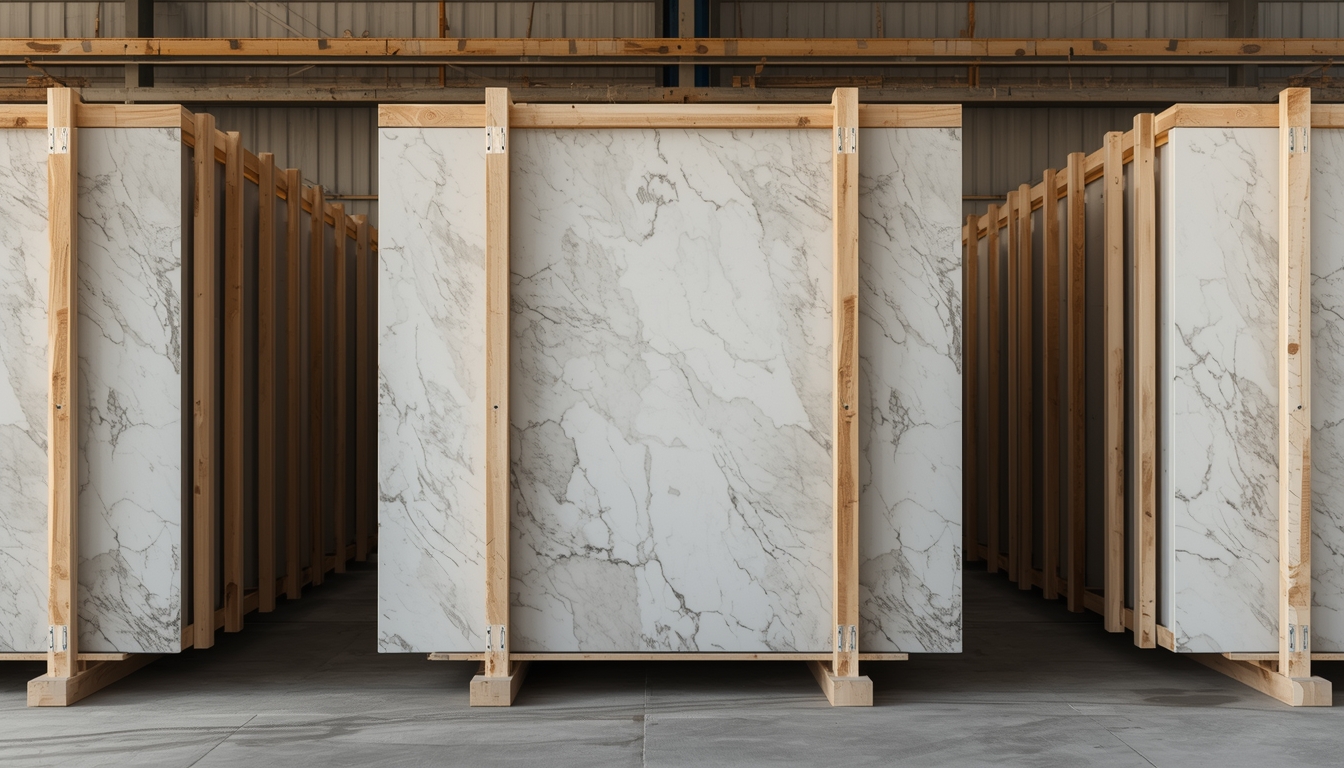
The most common cause of stone damage is improper packing or "flat-loading." We insist that all large slabs are packed in custom-built, heat-treated (ISPM-15 compliant) wooden crates. Inside the container, the slabs should be loaded in an A-frame position to distribute weight and pressure. We inspect the crating process personally. If a factory tells you they can just "wrap it in bubble wrap and shrink film" for a 40ft high-cube container, walk away.
| Feature | Natural Marble | Sintered Stone |
|---|---|---|
| Porosity | High (needs sealing) | Near zero |
| Heat Resistance | Moderate | Extremely high |
| Pattern | Unique/Organic | Consistent/Repeatable |
| Risk Factor | Etching/Staining | Cracking if unlevel |
| Best Use | Feature walls, baths | Kitchens, outdoors |
If you are choosing a pattern, always ask for a video of the actual slabs in the warehouse under natural light, not just professional showroom photos.
Key takeaways
- Verify the exact slab thickness (e.g., 12mm vs 20mm) to avoid installation failures.
- Demand photographic or video proof of vein matching for book-matched designs.
- Sintered stone is better for durability, but marble offers superior luxury and depth.
- Ensure all wooden packaging is ISPM-15 certified for international biosecurity.
- Plan for a 3-4 month window for production, shipping, and customs.
Questions buyers ask
Can I use sintered stone for outdoor kitchen countertops?
Yes, sintered stone is one of the best materials for outdoor use because it is UV resistant and won't fade or crack under extreme temperature shifts. It is much more durable than natural marble for outdoor environments.
How do I know if the "Calacatta" marble is real?
In Foshan, many suppliers sell "Calacatta-style" porcelain or quartz. If the price seems too low for real Italian marble, it is likely a porcelain slab designed to look like it. Always check the material composition in your specification.
What is the best way to ship heavy stone to the US or Australia?
Stone should be shipped via Full Container Load (FCL) to ensure it is not tossed around with lighter, bulkier goods. For the US, you must account for potential Section 301 duties on certain building materials, so check with a broker. For Australia, ensure your timber crates meet strict biosecurity standards to avoid quarantine delays.
Our team in Foshan visits the stone markets in China Ceramics City and the factories in the surrounding districts to inspect slabs for cracks, color consistency, and edge quality. We handle the technical specifications and the heavy lifting of logistics so you receive the exact stone your architect intended.